ADVERTISEMENT
Debunking the Myth: Why It’s Not Blood
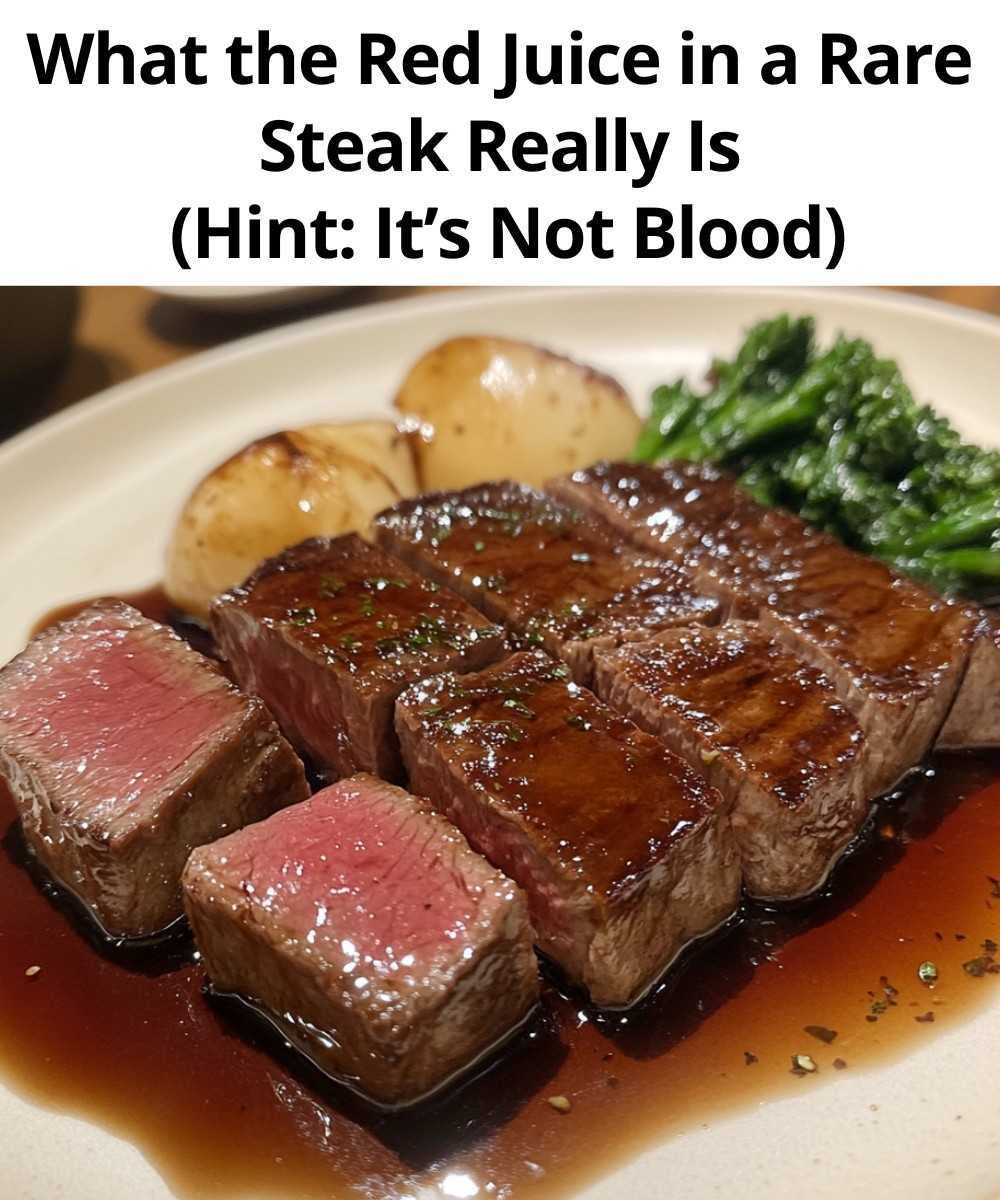
Contrary to popular belief, the liquid in your steak is not blood. During the slaughtering process, most of the animal’s blood is drained out. What remains in the meat is primarily water (about 75% of meat’s weight) along with proteins like myoglobin. When you see that red juice pooling on your plate, you’re actually looking at a mixture of water and myoglobin released from the meat’s cells during cooking.
What Happens to Myoglobin During Cooking?
The color of meat changes as it cooks due to transformations in myoglobin:
Why Does Red Meat Contain More Myoglobin?
Different types of meat contain varying amounts of myoglobin, which affects their color and texture:
Beef: Has a high concentration of myoglobin, giving it a dark red color when raw.
Lamb: Contains slightly less myoglobin than beef but still has a distinct red hue.
Pork: Classified as red meat but has a much lower myoglobin content, so it appears lighter.
Poultry: Chicken and turkey breast have very little myoglobin, making them pale in comparison to red meats.
This difference is why a rare steak appears red and juicy, while rare chicken would not have the same appearance.
