ADVERTISEMENT
1. **Use a Produce Saver**: If you’re storing greens in a bag, consider using a produce saver bag or liner, which is designed to absorb excess moisture and promote airflow, keeping the greens fresher for longer.
2. **Avoid Storing with Ethylene-Producing Fruits**: Certain fruits, like apples, bananas, and avocados, produce ethylene gas, which speeds up the ripening process and can cause your greens to spoil faster. Keep these fruits away from your salad greens in the fridge.
4. **Store Whole Heads of Lettuce**: If you bought a whole head of lettuce, such as Romaine or Butterhead, storing it as a whole rather than pre-cut can help it stay fresh for longer. Wrap it in a damp paper towel and place it in a plastic bag or airtight container.
5. **Spritz with Water**: For greens that start to look a bit wilted, spritzing them with a little water can help revive their crispness. Be sure to dry them again to prevent moisture buildup.
– **Storing wet greens**: One of the biggest mistakes people make is storing salad greens when they’re still damp. Moisture accelerates wilting and spoilage, so always dry your greens thoroughly before storing.
– **Overcrowding**: Overpacking the container or bag with greens can lead to squashed leaves, which are more likely to rot. Make sure you leave enough space for the greens to breathe.
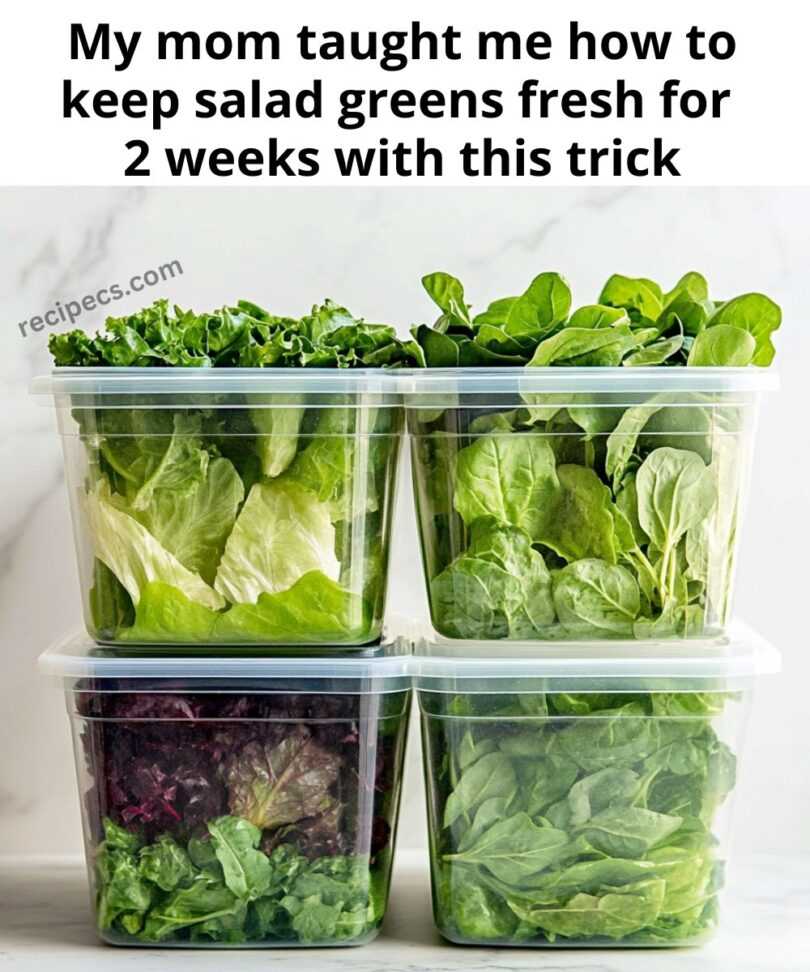
With the right care and storage techniques, you can easily extend the shelf life of your salad greens and reduce food waste. By properly washing, drying, and storing your greens with the help of paper towels and airtight containers, you can enjoy fresh, crisp lettuce, spinach, arugula, and more throughout the week. These simple steps will ensure that your salad greens stay vibrant, tasty, and ready for your next healthy meal, making it easier to eat fresh, nutritious salads every day. Try these methods and say goodbye to wilted, soggy salad greens!
