ADVERTISEMENT
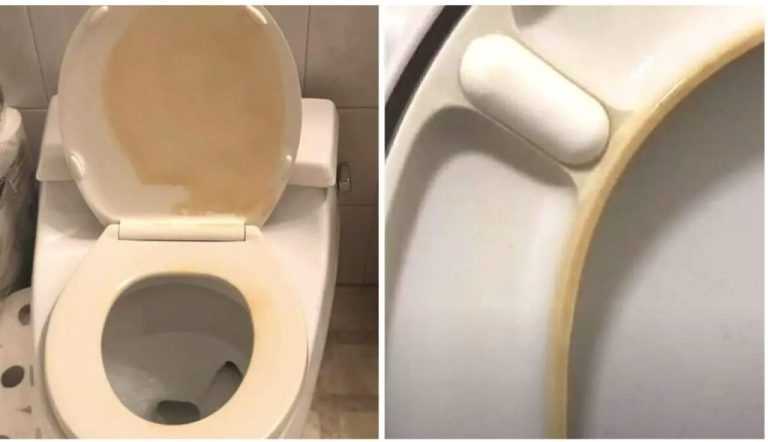
### **Causes of Yellow Stains on the Toilet Seat and in the Toilet Itself**
—
### **Common Causes of Yellow Stains in the Toilet**
**Solution:**
To remove hard water stains, use a toilet bowl cleaner designed to break down mineral deposits, or apply a mixture of white vinegar and baking soda. Let it sit for about 30 minutes before scrubbing with a toilet brush. Regular cleaning with a descaling agent can help prevent these stains from reappearing.
#### **2. Urine Stains**
Yellow stains on the toilet seat, rim, or even inside the toilet bowl can also be caused by urine. Over time, uric acid in urine can react with minerals in the water, leaving yellow marks behind. This is especially common in households with male members or small children who may miss the target, causing urine to splash onto the seat or other areas.
#### **3. Age of the Toilet**
Older toilets with worn-out or cracked surfaces are more susceptible to staining. The surface of older porcelain may not be as smooth, allowing more mineral buildup and bacteria to cling to it. This can lead to the development of yellowish stains over time, even with regular cleaning.
**4. Mold and Mildew**
While mold and mildew are typically associated with darker, more noticeable stains, certain types of mold can leave a yellowish or greenish hue on toilet seats and bowls. This is often due to moisture and lack of proper ventilation in your bathroom. Mold thrives in warm, damp environments and can cause discoloration in various parts of the bathroom, including the toilet.
