ADVERTISEMENT
#### 1. **Activate the Yeast:**
In a small bowl, combine the warm water and sugar. Sprinkle the active dry yeast over the water and stir gently to dissolve. Let it sit for 5-10 minutes until the mixture becomes frothy and bubbly. This means the yeast is active and ready to go. If it doesn’t foam, your yeast might be expired or the water may have been too hot or too cold, so try again with a fresh packet of yeast.
#### 2. **Prepare the Dough:**
In a large mixing bowl, combine the flour and salt. Make a well in the center and pour in the activated yeast mixture along with the softened butter. Using a wooden spoon or your hands, mix everything together until a rough dough forms. If the dough feels too sticky, add more flour, one tablespoon at a time, until it becomes manageable. On the other hand, if it’s too dry, add a little more water.
#### 4. **First Rise:**
Once kneaded, form the dough into a ball and place it in a lightly greased bowl. Cover it with a clean kitchen towel or plastic wrap. Let the dough rise in a warm place for about 1-1.5 hours, or until it has doubled in size. This is the first rise and allows the dough to develop its texture and flavor.
#### 5. **Shape the Dough:**
After the dough has risen, punch it down to release the air bubbles. Transfer it to a lightly floured surface and shape it into a loaf by folding the edges of the dough into the center and rolling it up tightly. Pinch the seam closed to seal it. Place the shaped loaf into a greased 9×5-inch loaf pan.
#### 7. **Preheat the Oven:**
While the dough is rising for the second time, preheat your oven to 375°F (190°C). The heat will ensure that the bread bakes evenly and achieves a nice golden crust.
#### 9. **Cool and Serve:**
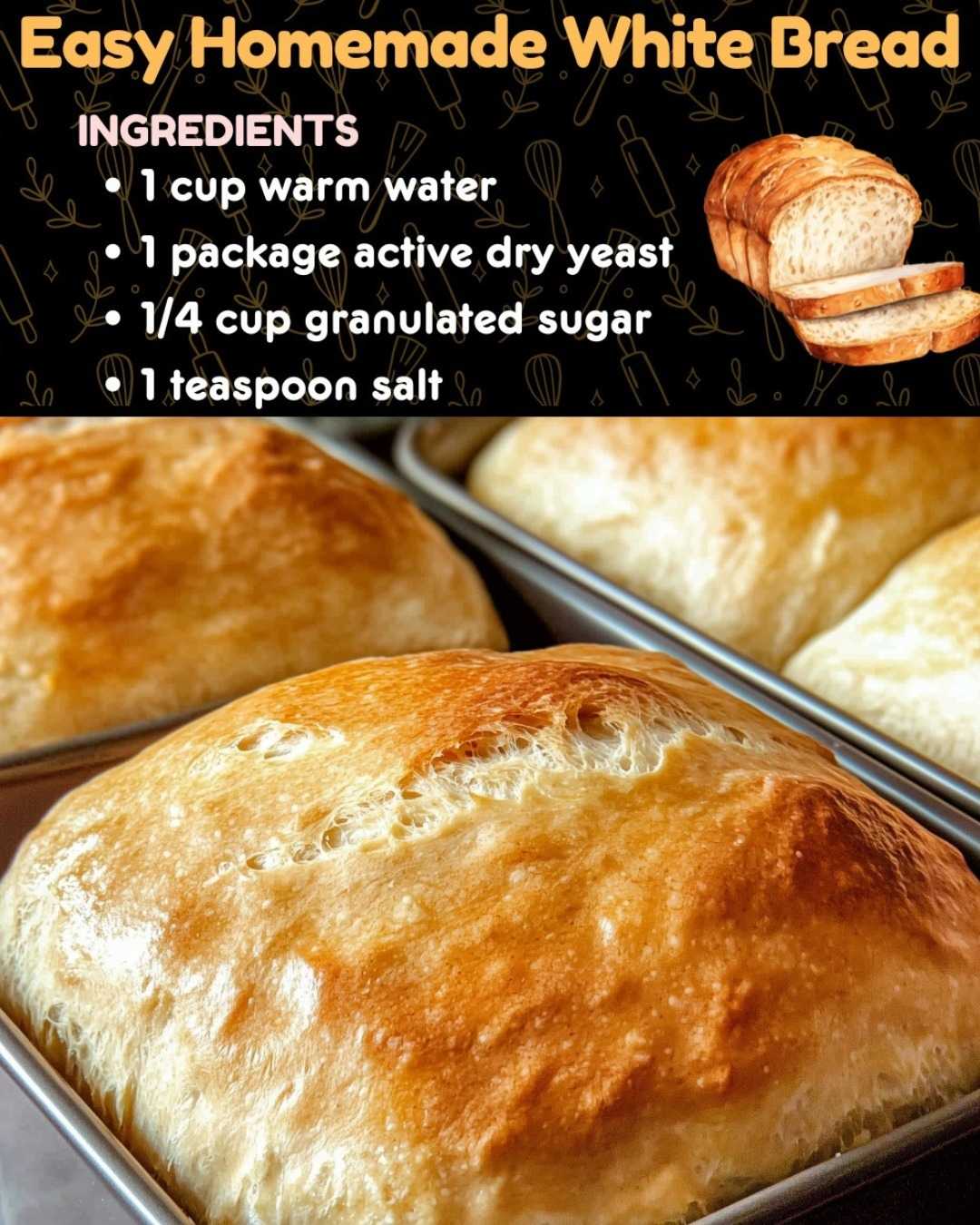
After baking, remove the bread from the oven and allow it to cool in the pan for 5 minutes. Then, transfer the bread to a wire rack to cool completely. This cooling step is crucial for the texture of the bread. Slice once it’s cool enough to handle, and enjoy!
– **Use Warm Water (Not Hot):** The water should be warm enough to activate the yeast but not too hot, as it can kill the yeast. Aim for a temperature around 110°F (43°C).
– **Knead Thoroughly:** Kneading is important for developing gluten, which gives the bread structure and texture. Don’t rush this step!
– **Allow for Proper Rising:** Be patient during the rising steps. The dough needs time to develop its flavors and texture. A warm, draft-free area is ideal for rising.
– **Check for Doneness:** The hollow sound test or using a thermometer ensures your bread is perfectly baked and not undercooked in the middle.
### Why Easy Homemade White Bread Works So Well
This recipe is also highly adaptable. You can swap out the all-purpose flour for bread flour for a slightly different texture or experiment with adding herbs, garlic, or seeds to give the bread more flavor.
### Pairing Easy Homemade White Bread
### Conclusion: Fresh, Simple, and Delicious
So why not try baking your own bread at home? Once you experience the joy of fresh, homemade bread, you may never want to go back to store-bought loaves again. Whether you’re a seasoned baker or a beginner, this **Easy Homemade White Bread** recipe is sure to become a go-to favorite in your kitchen!
