ADVERTISEMENT
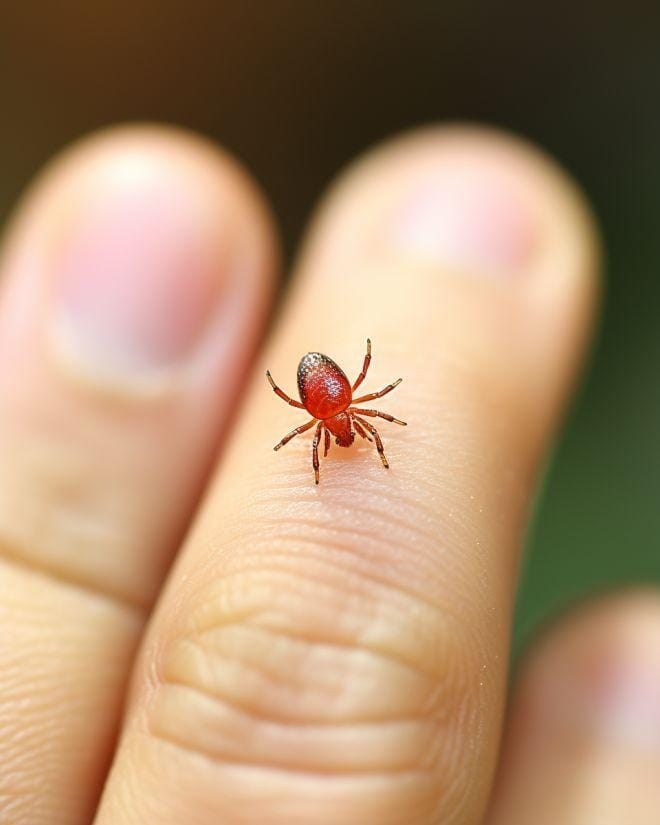
**If You Spot This Lone Star Tick, Here’s What You Need to Know**
### What Does the Lone Star Tick Look Like?
The **Lone Star tick** (Amblyomma americanum) is easily identifiable by its distinctive appearance. Here are some key characteristics to help you recognize this tick:
Lone Star ticks are **hard ticks**, which means they have a tough outer shell, unlike soft ticks that have a leathery appearance.
### Where Are Lone Star Ticks Found?
These ticks are also known to be particularly prevalent in the **summer months**, as that’s when they are most active. They can attach to animals or humans as they brush against vegetation and are often found on deer, dogs, or other mammals.
While not all Lone Star ticks carry diseases, they are known to transmit several potentially harmful conditions. Here are some of the key diseases associated with Lone Star ticks:
If left untreated, Ehrlichiosis can cause severe complications, including organ failure. Fortunately, it can be treated with antibiotics if caught early.
#### 2. **Tularemia**
Tularemia, also known as “rabbit fever,” is a rare but serious bacterial infection that can be transmitted by ticks, including the Lone Star tick. It is most commonly contracted when a tick bites a person after feeding on an infected animal. Symptoms of Tularemia can include:
– Sudden fever
– Chills
– Headaches
– Swollen lymph nodes
– Skin ulcers
#### 3. **Southern Tick-Associated Rash Illness (STARI)**
STARI is a condition that shares symptoms with Lyme disease, such as fever, headache, fatigue, and a characteristic circular rash at the site of the tick bite. While STARI is not fully understood, it is suspected to be caused by a bacterium transmitted by the Lone Star tick. Unlike Lyme disease, STARI doesn’t appear to have the same long-term complications, but it should still be treated with antibiotics.
#### 4. **Alpha-Gal Syndrome (Red Meat Allergy)**
One of the most concerning effects of Lone Star tick bites is **alpha-gal syndrome**, a condition that causes an allergic reaction to red meat (such as beef, pork, and lamb). This reaction is believed to occur after a Lone Star tick bites an individual, introducing a sugar molecule called **alpha-gal** into the bloodstream. Over time, some people develop an allergy to this sugar, which can cause severe reactions like hives, difficulty breathing, and anaphylaxis after consuming red meat.
If you live in or are visiting areas where Lone Star ticks are common, there are several preventive measures you can take to avoid getting bitten and reduce the risk of tick-borne diseases:
1. **Wear Protective Clothing**
When hiking, camping, or spending time outdoors in areas with tall grass or dense brush, it’s essential to wear **long sleeves**, **long pants**, and **closed-toed shoes**. Tucking your pants into your socks or boots can help prevent ticks from climbing up your legs.
For Complete Cooking STEPS Please Head On Over To Next Page Or Open button (>) and don’t forget to SHARE with your Facebook friends
