ADVERTISEMENT
#### **3. Color**
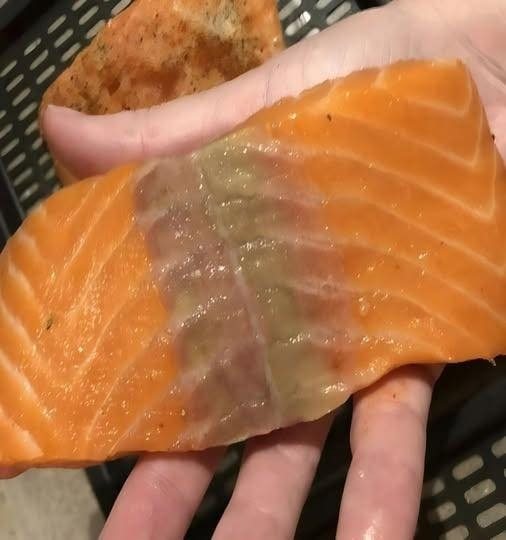
Check the overall color of the fish. Fresh salmon typically has a vibrant, pink or orange hue. A yellow stain could be from fat or natural variation, but if the salmon’s color looks off, like gray or brownish spots, it’s a sign the fish might be going bad.
### **Properly Storing Salmon**
To avoid encountering yellow stains or spoiled fish in the future, follow these tips for proper salmon storage:
2. **Freezing**: If you’re not planning to cook the salmon within a couple of days, freeze it. Wrap the fish tightly in plastic wrap, followed by aluminum foil or place it in a vacuum-sealed bag to prevent freezer burn.
3. **Storage Duration**: Try to consume fresh salmon within 1-2 days of purchase. If you’ve had it for longer than that, it’s better to inspect it carefully before deciding to cook it.
A yellow stain on your salmon doesn’t automatically mean the fish is spoiled. It’s often just a natural result of the fish’s oils or fat migrating to the surface, especially if it’s been in the fridge for a few days. However, it’s always important to use your senses — smell, texture, and color — to determine whether your salmon is still fresh and safe to eat.
As long as the salmon smells fresh, feels firm, and has a vibrant color (with only a slight yellow stain due to natural oils), it’s most likely safe to cook and enjoy. So, next time you find a yellow stain on your salmon, trust your senses and go ahead with your delicious dinner plans!
