ADVERTISEMENT
– **Extended Growing Seasons**: A walpini allows you to extend your growing season, meaning you can start planting earlier in the spring and harvest later in the fall, or even grow through the winter depending on your location.
– **Protection from Extreme Weather**: The underground location provides protection from strong winds, heavy rain, and frost, which can damage crops in above-ground greenhouses.
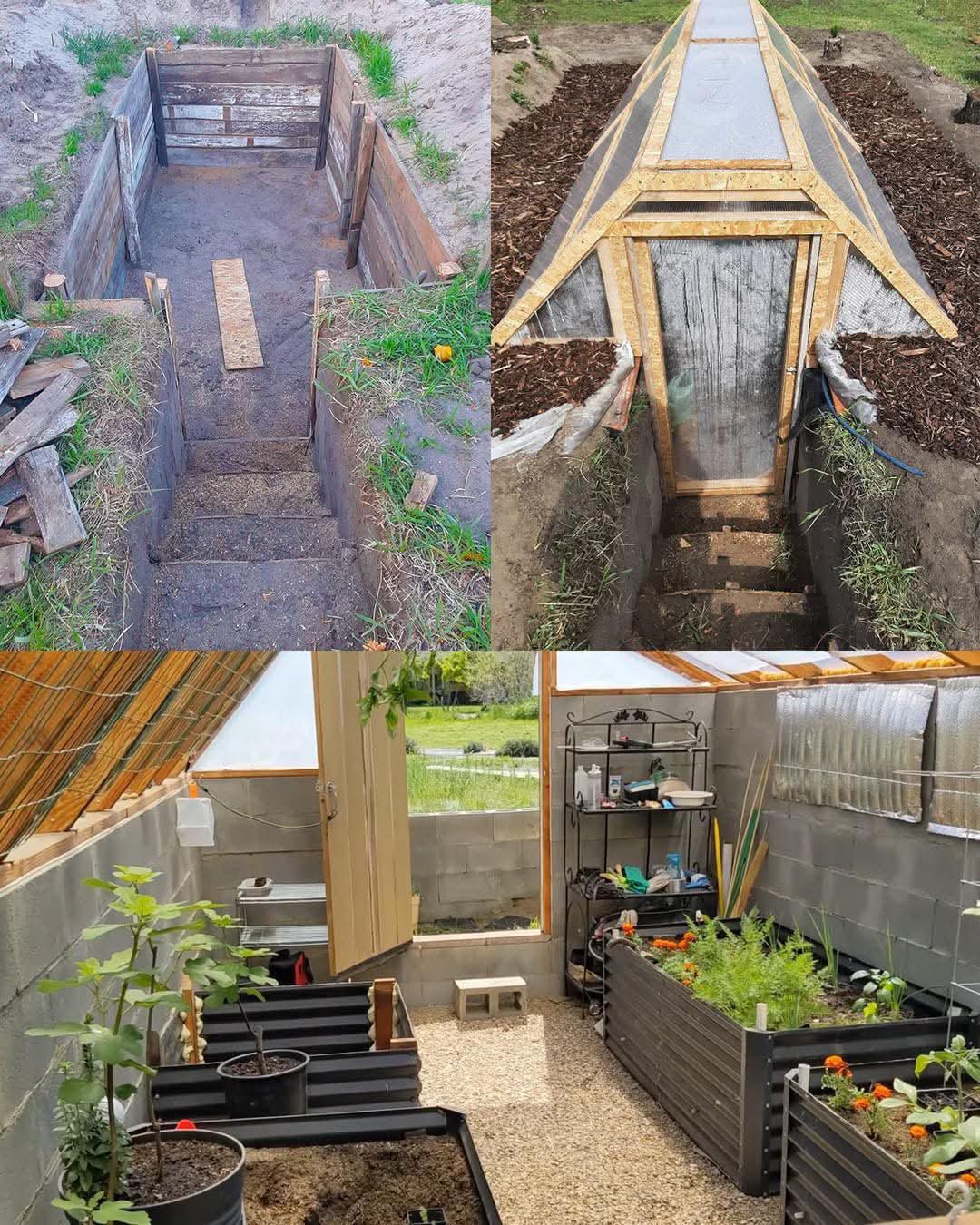
### Step-by-Step Guide to Building a Walpini
Now that you understand the benefits, let’s go over how you can build your own underground greenhouse. This project will require some basic construction skills, tools, and a bit of physical labor, but the results will be well worth the effort.
– **Avoid shady spots** or areas where water collects to prevent the greenhouse from becoming too cold or waterlogged.
– **Ensure good soil quality** in the area where you plan to dig. Good soil can help with drainage and ensure the plants grow well.
– **Use a shovel, pickaxe, or an excavator** (if available) to dig the hole.
– You can opt for a **rectangular** or **circular** shape depending on the space and layout of your property. Keep in mind that a larger greenhouse will provide more room for plants but may take longer to construct.
– **Ensure the sides of the pit are sloped** for stability and to allow for easier access.
– Install the **frame** using sturdy pipes, wood, or metal rods. These materials will form the skeleton of your greenhouse.
– The frame should be **arched** or **hooped** to allow for plenty of sunlight to enter through the roof.
– You can **reinforce the frame** with extra supports, especially if you live in an area that experiences heavy snow or strong winds.
#### 4. **Covering the Greenhouse**
Once the frame is in place, you’ll need to cover it with a material that will allow light to pass through while protecting your plants from the elements. Most walpinis use **clear plastic sheeting** or **polycarbonate panels** because they provide excellent light transmission and insulation.
#### 5. **Adding Insulation and Drainage**
While the earth provides natural insulation, it’s important to take extra steps to maintain a stable temperature inside the walpini.
– **Add a layer of insulation** around the edges of the pit if needed, especially if you’re building your walpini in a particularly cold climate. Insulating the walls with **straw bales**, **hay**, or **foam boards** will help keep the greenhouse warmer during the winter.
– **Create a drainage system** at the base of your pit to ensure that water doesn’t pool inside the greenhouse. This can be as simple as a gravel base or a drainage pipe that channels excess water away from the structure.
– **Make use of raised beds** inside your walpini to maximize space and improve soil drainage.
– **Watering and temperature management**: Use a combination of natural light, composting systems, and even simple heating options (such as passive solar or a small space heater) to keep your plants healthy.
– **Rotate crops** and practice good soil management to keep your plants thriving year-round.
Building an underground greenhouse or **walpini** is an excellent way to extend your growing season and enjoy fresh, homegrown food no matter the weather outside. By harnessing the natural insulating properties of the earth, you can create an energy-efficient, sustainable space for growing crops all year long.
While constructing a walpini does require careful planning, a bit of hard work, and some basic construction skills, the benefits it provides—extended growing seasons, energy savings, and a more self-sufficient lifestyle—are well worth the effort. Plus, there’s something incredibly rewarding about harvesting fresh, homegrown produce from your own underground greenhouse!
So, if you’re ready to take the next step toward sustainable living and year-round food production, building a walpini might just be the perfect project for you. Happy gardening!
