ADVERTISEMENT
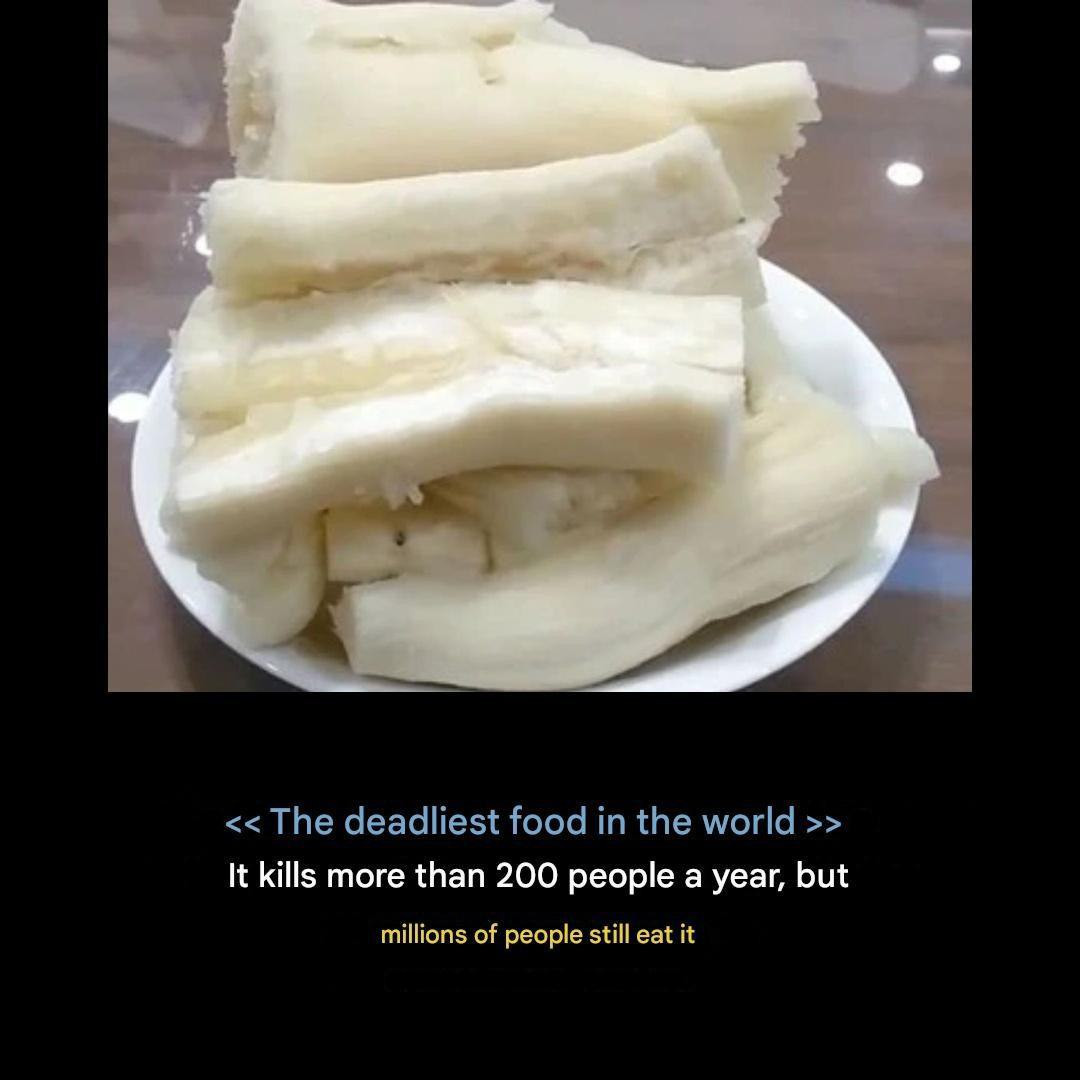
⚠️ Why Is Cassava Dangerous?
- Cassava contains compounds called cyanogenic glucosides, which can release hydrogen cyanide when the plant material (especially the bitter varieties) is eaten raw or processed inadequately. (Live Science)
- In times of food shortage or famine, when proper preparation is skipped, the risk of poisoning goes up. (ThatViralFeed)
- Poisoning symptoms range from headaches and dizziness to paralysis, seizures, and even death. Long‑term consumption of poorly processed cassava is also linked to a neurological disease called konzo, which causes irreversible paralysis of the legs. (Tiny House Zone)
💡 How People Make It Safe
The reason cassava remains safe for so many despite its danger is that traditional processing methods remove or reduce the toxic compounds. These include:
- Peeling the root thoroughly (since the highest toxin concentration is in the skin and peel).
- Soaking the peeled root in water, sometimes for extended periods.
- Boiling or drying in the sun before consumption. (Live Science)
✅ What This Means For You
If you or your community rely on cassava or similar root crops, it’s important to:
- Ensure proper processing — peel, soak, boil or dry thoroughly.
- Be aware that “sweet” vs “bitter” cassava varieties differ — bitter types contain higher toxin levels.
- Understand this isn’t just about food scarcity — even in well‑supplied settings, skipping prep increases risk.
- Advocate for education and food safety in regions where cassava is a staple.
🌟 Final Thoughts
Cassava is a powerful example of how a food can be both essential and potentially dangerous. When prepared correctly, it feeds hundreds of millions. But when the safe steps are skipped, the consequences can be deadly.
