ADVERTISEMENT
Excise duties on petrol decrease by 4.05 cents per litre.
Why did the government make this change?
Alignment of excise duties for environmental reasons: for years, diesel has enjoyed more favourable tax treatment than petrol. The European Union considers this disparity an environmentally harmful subsidy, because it incentivizes more polluting diesel vehicles.
Fiscal objectives: the increase in excise duties on diesel brings more revenue to the state coffers (we are talking about 552 million euros in 2026), useful for financing part of public spending and contributing to budget balance.
Stock market investment guides
Food blog hosting
❗ Important note: Actual prices at the pump will also continue to be influenced by the global oil market and supply/demand dynamics, but the increase related to excise duties is a legally certified increase.
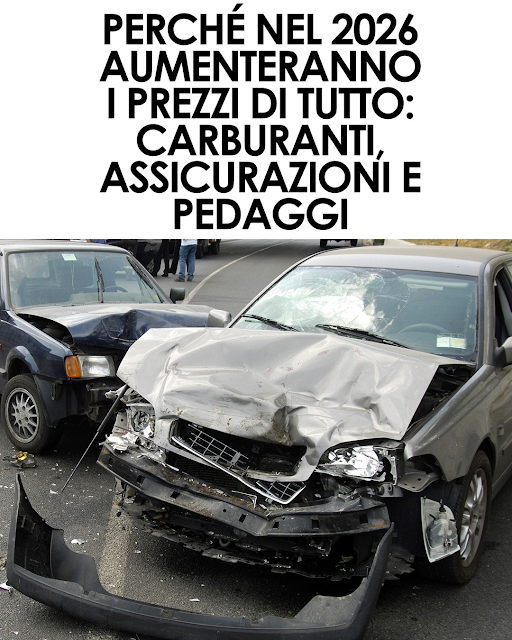
🛡️ 3. Insurance: significant increases
Another front of rising costs concerns the vehicle insurance sector, in particular motor liability and ancillary warranties.
👉 This increase is not mainly caused by the claims market, but by tax changes on some ancillary guarantees.
from the current rate of **2.5% it goes to 12.5%.
📊 Practical effect: In addition to the direct cost of insurance, many people will also have to pay more for ancillary coverage that used to cost less due to taxes.
🧾 4. Excise duties and new taxes: higher costs on consumer goods
🚬 4.1 Excise duties on cigarettes and smoking products
The Budget Law introduced increases in excise duties on cigarettes, cut tobacco and electronic cigarette products.
👉 This is a classic example of indirect taxation: not only are taxes increased to collect revenue, but an attempt is also made to discourage behaviors considered harmful to health (protection of public health).
📦 4.2 Parcel and service contributions
From 2026, there is a contribution of €2 for each parcel sent from non-EU countries under €150, part of the new tax measures for online commerce.
