ADVERTISEMENT
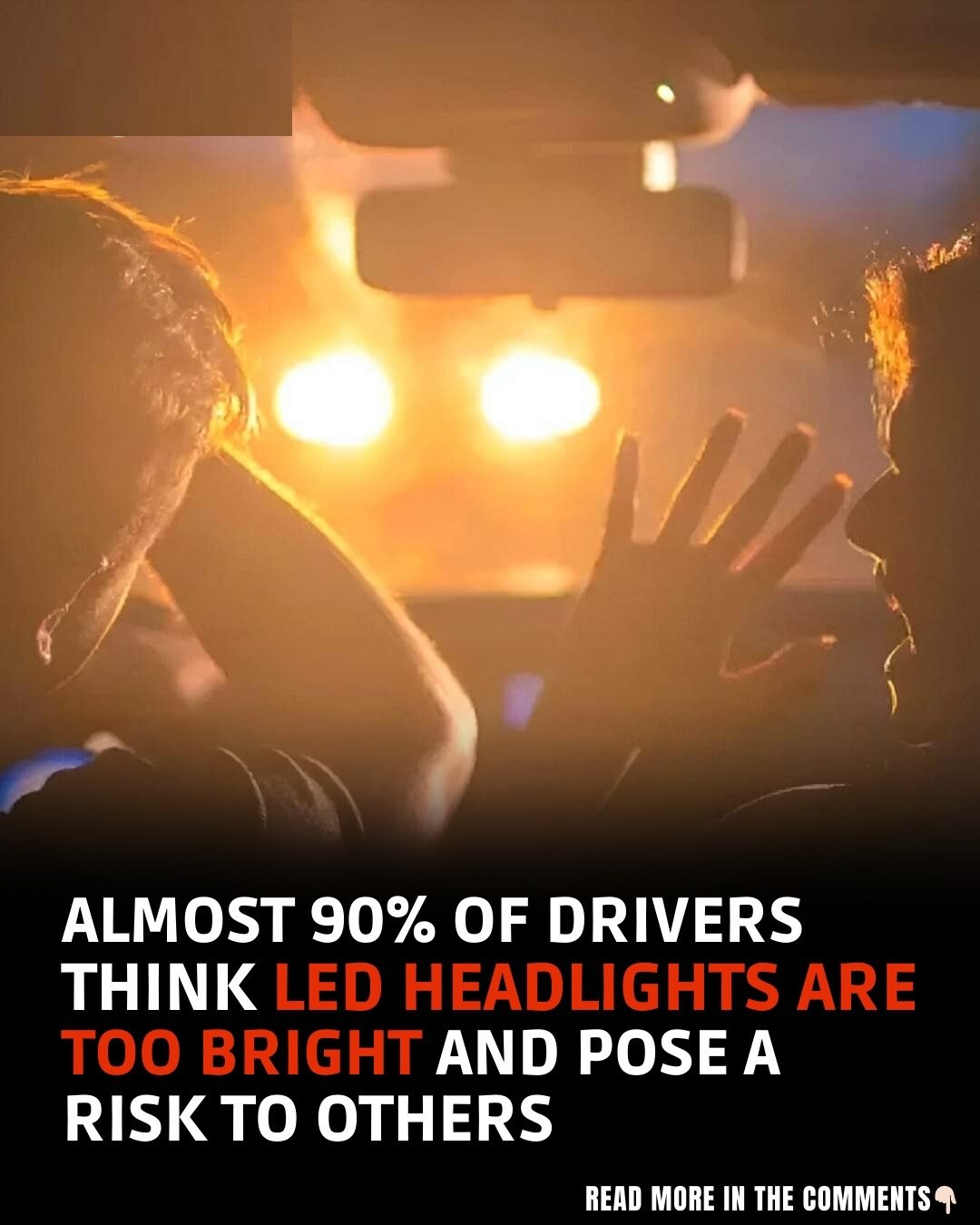
Initially celebrated for enhancing visibility and reducing maintenance costs, these lights have now sparked concerns about road safety. Unlike halogen headlights, which emit a warmer, more diffuse light, LEDs produce a concentrated, intense beam.
A misalignment of just a few degrees can dramatically increase glare, temporarily blinding drivers for several crucial seconds.
The problem is compounded by the growing size and height of vehicles on modern roads. Taller vehicles mean their headlights sit above the natural line of sight for many drivers, directing light straight into the eyes of smaller cars.
Data from traffic safety organizations indicates that glare-related incidents contribute to a measurable portion of nighttime collisions, though exact statistics are difficult to determine because the cause—temporary blindness—is often not recorded in official reports.
Current headlight regulations, many of which were established decades ago, were designed primarily for halogen lighting. These standards set limits on beam intensity and height but often fail to account for the modern mix of vehicle sizes, headlight types, and road conditions.
While some newer vehicles incorporate adaptive lighting systems capable of automatically adjusting beam intensity and angle based on oncoming traffic and road curves, these technologies are not yet widespread. As a result, millions of drivers remain exposed to intense glare from improperly aligned or overly bright headlights.
A momentary blindness lasting three to five seconds can mean the car has traveled between 285 and 475 feet—well over the length of a football field—without the driver being able to accurately perceive obstacles, curves, or traffic.
Experts point out that the issue is not about over-sensitive drivers but rather how the technology is implemented. LEDs themselves are not inherently unsafe; the dangers arise from the combination of high-intensity beams, vehicle design, and regulatory gaps.
Safety solutions exist, but enforcement is inconsistent. Recommendations include stricter limits on maximum glare, mandatory headlight alignment inspections during vehicle maintenance or annual safety checks, and wider adoption of adaptive lighting systems capable of dynamically adjusting to traffic and road conditions.
Continue reading…
