ADVERTISEMENT
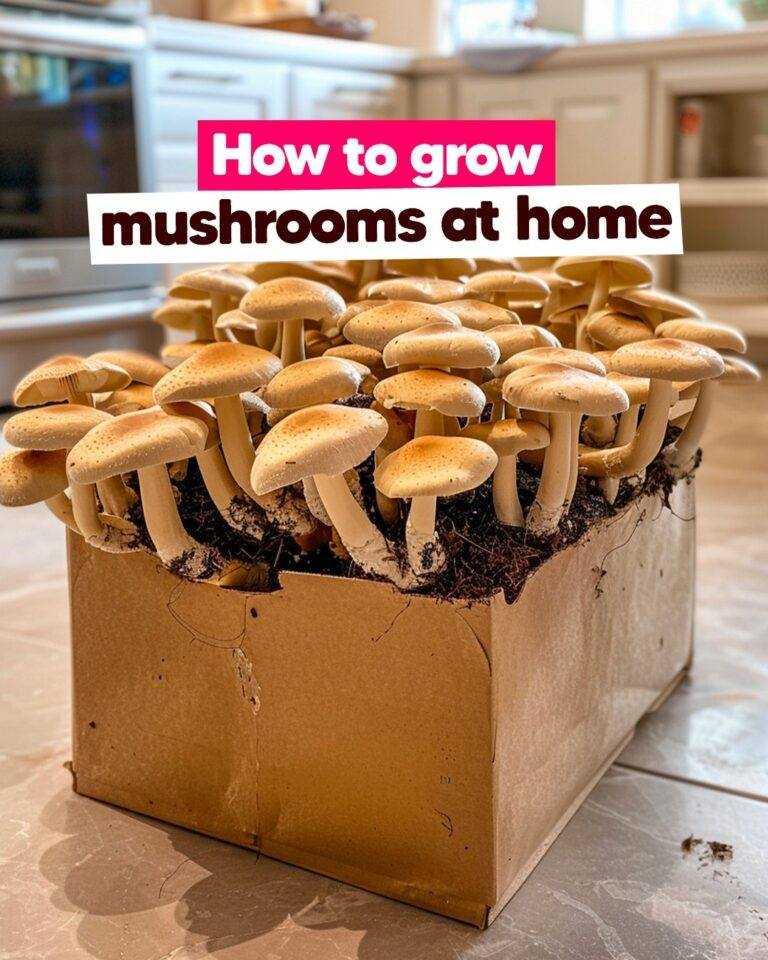
**How to Cultivate Mushrooms at Home: A Step-by-Step Guide for Beginners**
### Why Grow Mushrooms at Home?
Growing mushrooms at home offers several benefits:
– **Cost-effective**: Store-bought mushrooms can be pricey, especially organic ones. Growing your own allows you to save money in the long run.
– **Freshness**: Homegrown mushrooms are incredibly fresh, and they can be harvested right before cooking, providing the best flavor.
– **Sustainable**: Cultivating mushrooms is an eco-friendly practice. They grow quickly, require minimal resources, and can even be grown in small spaces.
– **Fun and Educational**: Growing mushrooms is a fascinating process, and watching them develop from tiny spores into fully grown mushrooms can be quite rewarding.
There are several types of mushrooms you can grow at home, and the best choice will depend on your preferences and the space you have available. Some popular mushroom varieties to grow at home include:
1. **Button Mushrooms (Agaricus bisporus)**: The most common type of mushroom, these are easy to grow and widely available.
2. **Oyster Mushrooms (Pleurotus ostreatus)**: Known for their delicate flavor and fast-growing nature, these mushrooms are perfect for beginners.
3. **Shiitake Mushrooms (Lentinula edodes)**: These mushrooms are prized for their rich, savory flavor and are often used in Asian cuisine.
4. **Lion’s Mane Mushrooms (Hericium erinaceus)**: A unique mushroom with a lobster-like texture and a mild, sweet taste.
5. **Portobello Mushrooms (Agaricus bisporus)**: A larger variety of button mushrooms, perfect for grilling or stuffing.
### Step 2: Obtain Mushroom Spawn or Spores
You can purchase mushroom spawn online, at local gardening stores, or even from specialty mushroom suppliers. Common forms of spawn include:
– **Grain spawn**: Rye or millet grains inoculated with mycelium, which can be used to inoculate a growing medium.
– **Plug spawn**: Small wooden plugs inoculated with mycelium, ideal for inoculating logs.
– **Sawdust spawn**: Sawdust that has been colonized with mushroom mycelium, typically used for growing mushrooms on wood.
### Step 3: Prepare the Growing Medium
Mushrooms grow in various environments, but they all need a nutritious, moist substrate to thrive. The growing medium provides the nutrients the mushroom mycelium needs to develop.
For simplicity, especially as a beginner, consider purchasing a mushroom-growing kit that includes a ready-to-use substrate, or follow instructions specific to your chosen mushroom type to prepare your own growing medium.
### Step 4: Inoculate the Growing Medium with Mushroom Spawn
1. **For Sawdust or Straw Substrates**:
– Break up the spawn into smaller pieces and mix it thoroughly into the substrate. Make sure the spawn is evenly distributed for consistent growth.
– If using a kit, follow the manufacturer’s instructions for inoculation.
2. **For Logs (Shiitake Mushrooms)**:
– Drill small holes into the logs and insert plug spawn into the holes. Seal the holes with wax to prevent contamination and maintain moisture.
### Step 5: Incubate and Wait for Mycelium to Grow
After inoculating the substrate, allow the mycelium to colonize it. During this incubation period, which can take anywhere from a few weeks to a couple of months, the mycelium will spread through the substrate, creating a white, fuzzy network.
For Complete Cooking STEPS Please Head On Over To Next Page Or Open button (>) and don’t forget to SHARE with your Facebook friends
