ADVERTISEMENT
**6 Things to Cook Your Food With & 6 Things to Never Cook Your Food With**
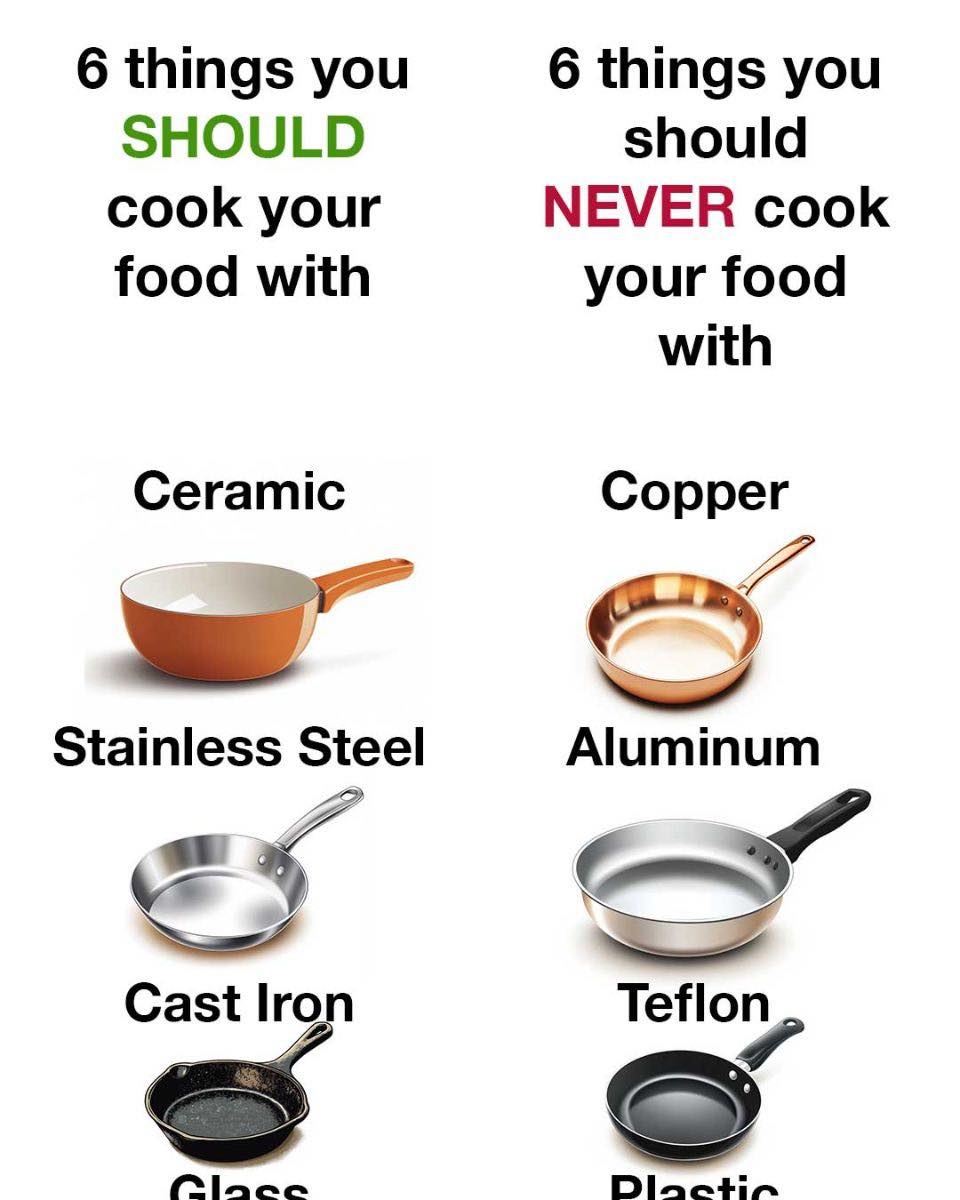
In this article, we’ll explore **six things you should definitely cook with** and **six things you should never cook with**—so you can elevate your cooking game and avoid some common pitfalls.
### **6 Things to Cook Your Food With:**
**Why use it?**
– **Even heat distribution:** Cast iron ensures consistent heat, preventing hot spots.
– **Long-lasting:** With proper care, a cast iron skillet can last a lifetime and even improve with age (the more you use it, the more seasoned it becomes).
– **High heat tolerance:** You can easily use it on the stovetop or in the oven, making it perfect for a variety of recipes.
#### 2. **Nonstick Pans**
Nonstick cookware is a must-have for those who want to cook delicate foods like eggs, pancakes, or fish without worrying about them sticking to the surface. These pans are designed with a coating that reduces friction and makes cleanup much easier.
#### 3. **Stainless Steel Pans**
Stainless steel pans are known for their durability and versatility. They are perfect for searing meats, sautéing vegetables, and making sauces. Unlike nonstick pans, stainless steel can withstand high heat, which makes them ideal for browning and caramelizing.
#### 4. **Dutch Ovens**
A Dutch oven is a heavy, thick-walled pot that excels at slow cooking, braising, and stews. These pots are perfect for making soups, stews, casseroles, and even baking bread! They’re often made of cast iron with an enamel coating for easier maintenance.
#### 5. **Wooden Spoons**
Wooden spoons have been a kitchen staple for centuries, and for good reason. They’re perfect for stirring, mixing, and tasting your dishes. The non-reactive nature of wood ensures your food doesn’t pick up any unwanted flavors, and they won’t scratch your pots and pans.
**Why use it?**
– **Gentle on cookware:** Wooden spoons won’t scratch delicate surfaces like nonstick pans.
– **Heat-resistant:** Unlike metal spoons, they don’t conduct heat, making them safer to handle.
– **Flavor preservation:** Wood doesn’t react with acidic ingredients, which helps preserve the natural flavor of your food.
**Why use it?**
– **Time-saving:** Pressure cookers drastically reduce cooking times, making them perfect for busy schedules.
– **Locks in flavor and nutrients:** The sealed environment helps foods cook faster while preserving their taste and nutrients.
– **Versatile:** Great for soups, stews, meats, and even desserts like cheesecakes or rice puddings.
—
#### 1. **Aluminum Cookware**
While aluminum cookware is lightweight and inexpensive, it can react with acidic foods like tomatoes and citrus, which can affect the flavor of your dishes. Additionally, over time, it can develop pitting, especially when used for high-heat cooking.
2. **Teflon (PTFE) Coated Cookware**
Teflon-coated cookware has long been a popular choice for nonstick cooking. However, when heated to high temperatures, Teflon can release toxic fumes that may pose a health risk. The coating can also wear off over time, causing potential contamination of your food.
For Complete Cooking STEPS Please Head On Over To Next Page Or Open button (>) and don’t forget to SHARE with your Facebook friends
