ADVERTISEMENT
**Know What You’re Buying: The Visible and Hidden Differences Between Store-Bought Beef and Farm-Fresh Beef**
In this article, we’ll break down the visible and hidden differences between store-bought beef and farm-fresh beef, so you can better understand what goes into your purchase and how it might affect your health and your meal.
### Visible Differences: What You Can See
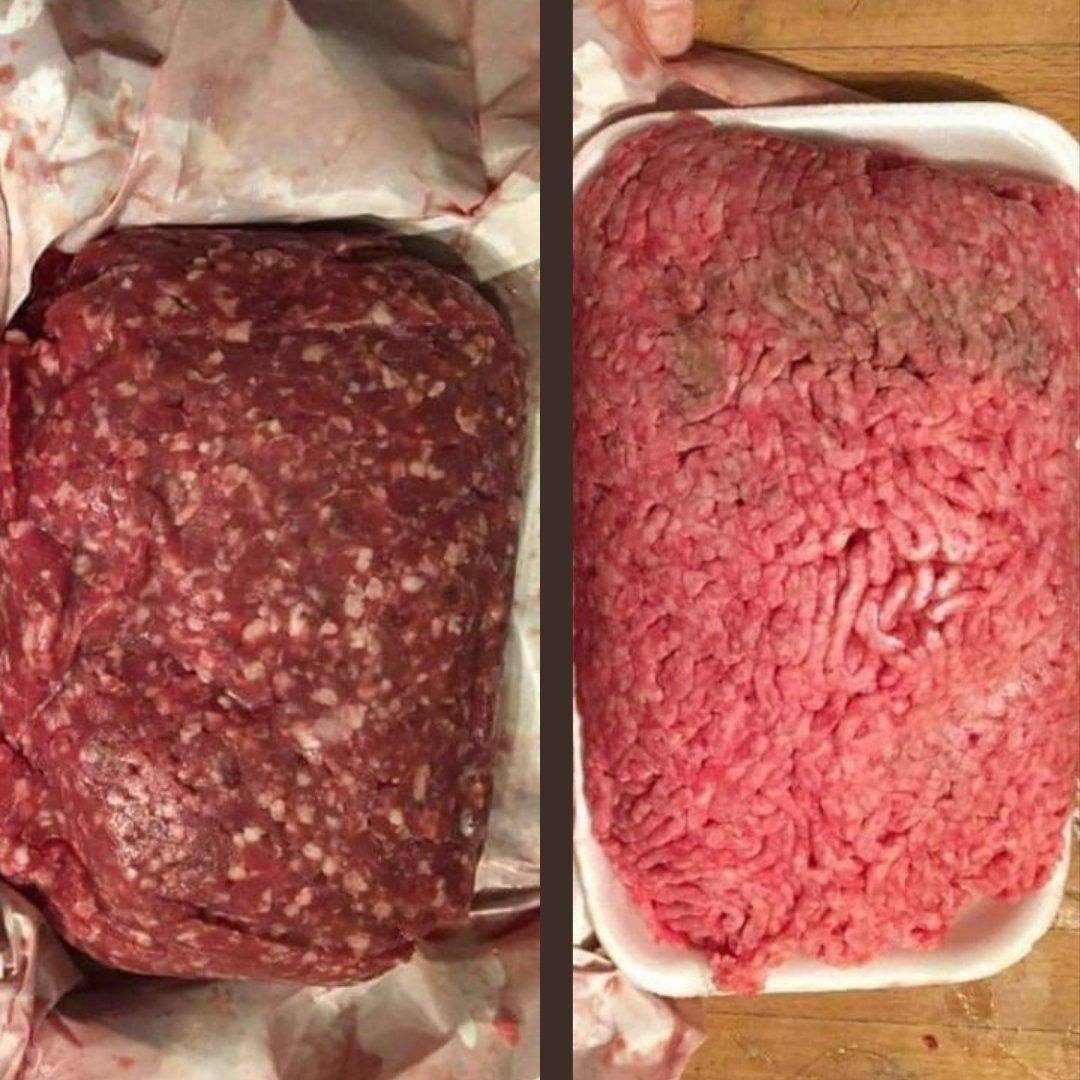
– **Store-Bought Beef**: Often, store-bought beef is bright red and might have a more consistent marbling throughout the cut. This beef is often treated with preservatives or carbon monoxide to maintain its red color, which can give it a fresher appearance than it might otherwise have. The marbling is typically well-distributed, but sometimes it can appear more processed, depending on the source.
– **Farm-Fresh Beef**: Farm-fresh beef, especially if it’s grass-fed, may have a darker, richer color—sometimes a deeper red or even a purplish hue. The marbling is less uniform, with visible areas of lean meat surrounded by small streaks of fat. Grass-fed beef tends to have less marbling than grain-fed beef, but the fat present is usually of higher quality (more omega-3s and conjugated linoleic acid).
– **Store-Bought Beef**: The fat in store-bought beef is often white or off-white. It may appear slick or shiny due to the preservation methods used, which can include artificial coloring or packaging treatments.
### Hidden Differences: What’s Not Immediately Visible
– **Store-Bought Beef**: Much of the store-bought beef is grain-fed, meaning cattle are raised on a diet of corn and soy, which can affect the fatty acid composition of the meat. Grain-fed beef tends to have more omega-6 fatty acids, which, when consumed in excess, can promote inflammation in the body. Additionally, the meat may have more total fat and less beneficial nutrients like vitamins and antioxidants.
– **Farm-Fresh Beef**: On the other hand, farm-fresh beef—especially beef from cattle that are grass-fed—tends to have a better nutritional profile. Grass-fed beef is leaner, with less overall fat, but it is higher in omega-3 fatty acids, which are heart-healthy fats. Grass-fed beef also tends to contain more antioxidants like vitamin E and beta-carotene, as well as a better balance of vitamins and minerals like zinc, iron, and B-vitamins.
