ADVERTISEMENT
A colorful decision in the meat aisle
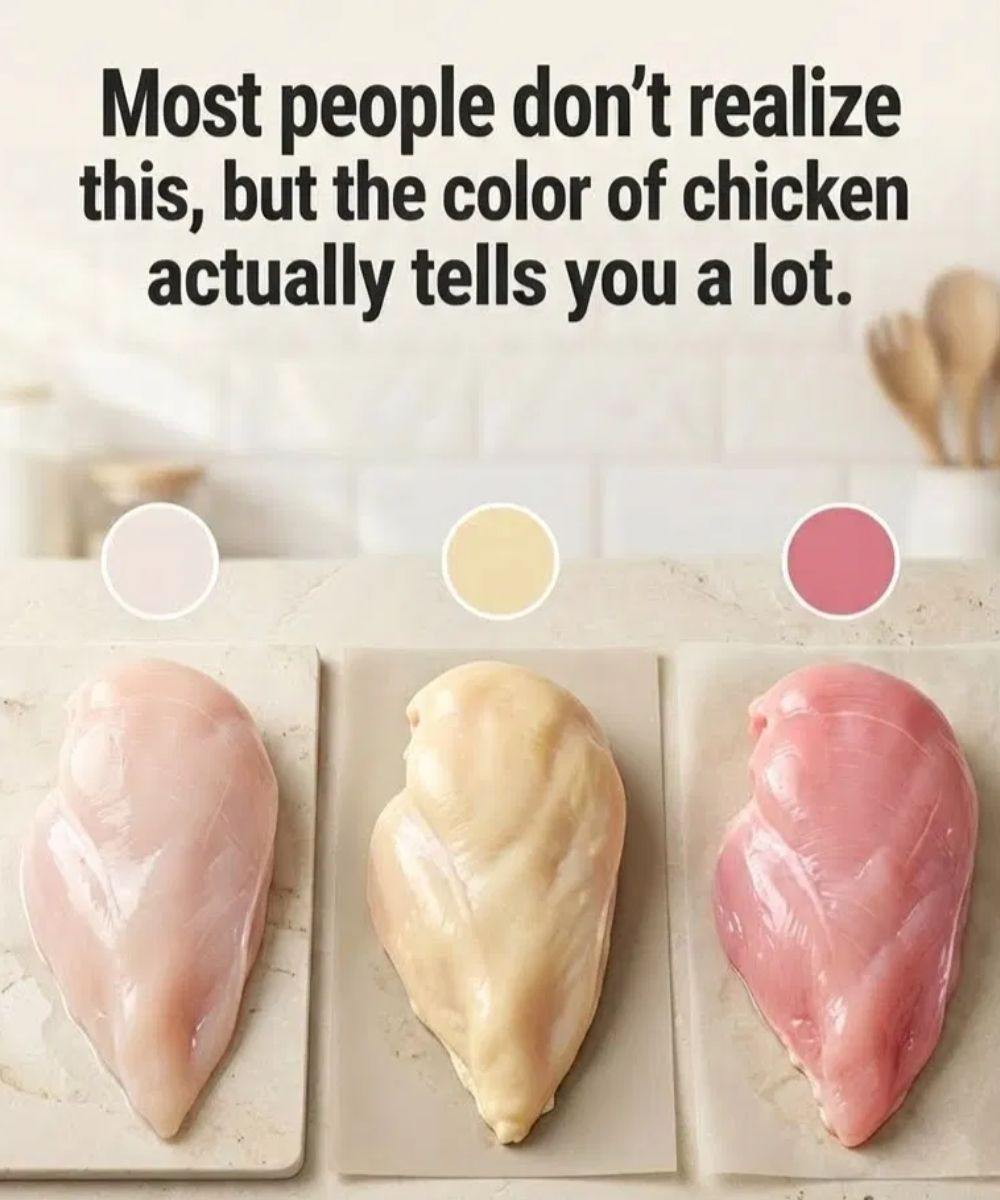
That pack of chicken in your shopping cart might be telling a story you haven’t noticed yet. One tray looks light, almost pink. Another stands out with a rich yellow hue. Same cut. Similar price. Completely different look. It’s natural to pause and wonder what that contrast really means. Is one treated with additives? Is the other more nutritious? Or is color simply shaping your expectations before you even read the label?
Pale chicken is most often linked to large-scale commercial farming.
These birds are bred for fast growth and efficiency. Their diets are tightly managed to maximize weight gain, and they typically live indoors with little room to move. This system produces affordable chicken in massive quantities, which is why lighter-colored meat is so common on supermarket shelves. While the pale color doesn’t automatically mean the meat is unhealthy or unsafe, it does reflect a production model focused on speed rather than natural behavior.
Yellow chicken usually suggests a different background.

